A front door deadbolt that sticks, refuses to turn, or feels rough inside the lock is more than just a daily inconvenience – it’s often an early warning sign that your home’s main security barrier is beginning to fail. This problem is extremely common in Columbus, Ohio, where rapid temperature changes, aging homes, and high humidity impact door alignment and lock performance year-round.
Whether you live in Grandview Heights, Clintonville, German Village, Worthington, or Grove City, sticking deadbolts remain one of the most frequent issues reported by Columbus homeowners.
This comprehensive guide will explain:
- Why your deadbolt is sticking
- Weather-related lock issues unique to Columbus
- When you should repair, rekey, or replace the lock
- How to prevent future lock failures
- Professional solutions from Costa Locksmith
- And answers to the most frequently searched questions
Throughout the article, you will see strategic internal linking anchors such as:
Residential Locksmith Services, Lock Installation & Repairs, Home Rekeying Service, Emergency Locksmith Service, Smart Lock Installation, and Security & Safe Services.
Let’s dive into the real reasons behind a sticking deadbolt – and what Columbus homeowners should do about it.
🔐 What It Means When Your Front Door Deadbolt Starts Sticking
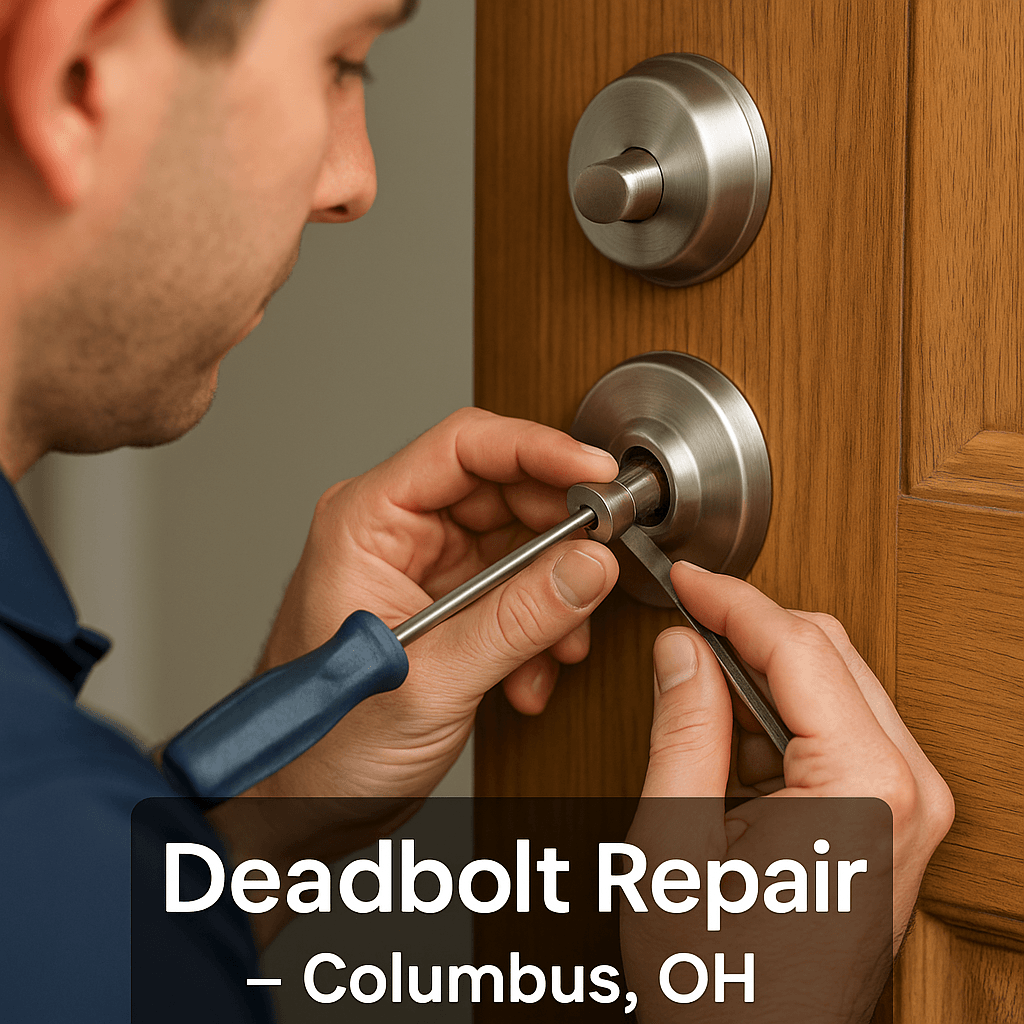
A sticking deadbolt usually means the lock’s internal components are no longer aligned or functioning properly.
This creates symptoms like:
- The key won’t insert smoothly
- The turn feels tight or jams halfway
- The lock only works when you lift/push the door
- You must jiggle the key to turn it
- The deadbolt scrapes against the frame
- The thumbturn is stiff or grinding
While some homeowners assume the lock is simply “old,” the real causes are much more specific – and most of them are fixable.
🌡️ Common Columbus Weather Problems That Affect Deadbolts
Columbus weather is unpredictable: humid summers, freezing winters, fast temperature swings.
These conditions cause:
1. Door Expansion & Contraction
Wooden doors expand in humidity and shrink in cold, causing misalignment.
2. Moisture in the Lock Cylinder
Humidity causes moisture buildup inside the cylinder, making the turn stiff.
3. Winter Metal Contraction
When temperatures drop near freezing, metal components contract, creating friction.
4. Lubricant Thickening in Cold Weather
Cheap lubricants thicken in low temperatures, slowing the lock mechanism.
This is why deadbolt issues spike in Columbus during:
❄ January–March
🌧 April–May
🔥 August humidity
For these cases, Lock Installation & Repairs is the ideal service.
🏡 Structural Issues That Cause a Sticking Deadbolt
Not every sticking deadbolt is caused by weather – often, the door structure itself is the problem.
1. Misaligned Strike Plate
If the deadbolt does not enter the strike plate perfectly, it grinds or jams.
2. Loose Door Hinges
Sagging hinges cause the door to shift slightly, forcing the lock to bind.
3. Settling Foundation
Many older Columbus neighborhoods (like Clintonville and German Village) have shifting foundations that cause long-term door misalignment.
4. Worn-Out Deadbolt Components
Deadbolts last 5–10 years depending on usage; beyond that, springs and pins wear down.
5. Cheap Builder-Grade Locks
Many Columbus homes built after 2000 used inexpensive mass-produced locks that wear out quickly.
If your lock hardware itself is failing, you may need Lock Installation & Repairs or Smart Lock Installation.
🔑 Key Problems That Cause Deadbolts to Stick
Sometimes the problem isn’t the lock – it’s the key.
1. Worn Keys
Worn or bent keys grind the lock pins.
2. Cheap Duplicate Keys
Hardware store key machines often produce “almost right” copies, causing:
- friction
- sticking
- pin misalignment
3. Dirty or Corroded Key Blades
Dust, lint, and moisture on the key affect lock performance.
If your original key works better than a duplicate, your lock must be rekeyed using Home Rekeying Service.
🧩 Internal Lock Problems That Cause Sticking
Inside every deadbolt are tiny components:
- springs
- pins
- drivers
- shear line
- cylinder housing
When these wear out, the deadbolt becomes tight, crunchy, or unresponsive.
Common signs your lock cylinder is failing:
- grinding sounds
- key roughness
- inconsistent turning
- lock feels “gritty”
This usually requires a professional cleaning, rekeying, or replacement.
🧰 Should You Repair, Rekey, or Replace a Sticking Deadbolt?
Different problems need different solutions. Let’s break down the best option for each scenario.
🛠️ Fix the Lock (Repair) If:
- The door is misaligned
- The strike plate is off
- Hinges are loose
- The lock is only seasonally stiff
- Internal dust buildup is causing friction
Repairs are part of Lock Installation & Repairs and usually take 15–30 minutes.
🔄 Rekey the Lock If:
- Keys are worn
- The lock works better with a spare key
- You want new keys without buying a new lock
- You recently moved into the home
- Someone else may have access
This is where Home Rekeying Service is ideal.
🔐 Replace the Lock If:
- The deadbolt is rusted or grinding
- The cylinder pins are worn out
- The lock is more than 10 years old
- You want a high-security lock
- You’re upgrading to smart locks
Recommended: Smart Lock Installation or Lock Installation & Repairs.
🧠 The Most Dangerous Mistake Homeowners Make
Most people try spraying WD-40 into the lock.
This is a huge mistake.
WD-40 is not a lubricant – it is a solvent that:
- damages lock pins
- attracts dust
- creates sludge
- causes long-term jamming
A professional locksmith uses graphite or lock-specific dry lubricants, not WD-40.
🛡️ How Costa Locksmith Fixes a Sticking Deadbolt (Professional Process)
Here’s what a certified technician does step-by-step:
- Diagnose lock alignment
- Inspect hinges & doorframe
- Test cylinder rotation
- Remove deadbolt
- Clean internal components
- Replace worn pins & springs
- Rekey or adjust cylinder as needed
- Reinstall tightened strike plate
- Test multiple times
- Provide new keys if required
- Recommend upgrades as needed
Columbus homeowners usually see immediate improvement.
Internal linking anchors used:
Residential Locksmith Services, Lock Installation & Repairs, Home Rekeying Service, Smart Lock Installation
🔥 When a Sticking Deadbolt Turns Into an Emergency
A sticking lock becomes a full emergency when:
- the key breaks inside the lock
- the door won’t unlock
- the lock jams completely
- you’re locked out at night
- the door won’t secure properly
At this point, you need Emergency Locksmith Service.
Fast response in:
- Columbus
- Grove City
- Dublin
- Hilliard
- Westerville
- Reynoldsburg
🛠️ Preventative Maintenance for Deadbolts (2025 Columbus Guide)
Follow this checklist:
✔ Every 3 Months
- Check hinge screws
- Clean the strike plate
- Test key smoothness
- Ensure door alignment
✔ Every 6 Months
- Inspect cylinder wear
- Test both sides of the lock
- Tighten any loose hardware
✔ Once a Year
- Full checkup with Residential Locksmith Services
🏡 Old Columbus Homes Need Special Lock Care
Areas with older homes:
- Clintonville
- German Village
- Old North
- Merion Village
- Victorian Village
These homes shift over time, causing locks to stick due to:
- warped doors
- old hinges
- original 1960–1980s lock hardware
These homes often need full lock replacement or Security & Safe Services upgrades.
Costa Locksmith
Columbus, Ohio
Phone: +1 203-648-2000
Website: https://costalocksmith.online/
24-Hour Mobile Residential, Automotive, and Emergency Locksmith Services
❓ FAQs
1. Why does my deadbolt stick only in winter?
Cold temperatures shift door alignment and thicken internal lubricants.
2. Should I replace or repair a sticking deadbolt?
If the lock is under 7 years old, repair is fine. Older locks may need replacement.
3. Why does the lock work better when I pull the door toward me?
Your door is misaligned with the strike plate.
4. Can I fix a sticking lock with WD-40?
No – it damages internal components.
5. How long does lock repair take?
Most repairs take 15–25 minutes.
6. Should I rekey or replace if keys are worn out?
Rekeying is the best option.
7. Why does my key turn halfway and then jam?
Internal pins are misaligned or damaged.
8. Are sticking locks a sign of a break-in attempt?
Sometimes – scratches or grinding marks should be checked.
9. Can humidity cause deadbolts to stick?
Yes – swelling wood affects lock alignment.
10. When should I call a locksmith?
If the lock sticks more than once per week or jams suddenly.